


Explore efficacy1-3
Results from the RAISE and RAISE‑XT clinical trials
Actor portrayal.
RAISE: Primary Endpoint MG-ADL
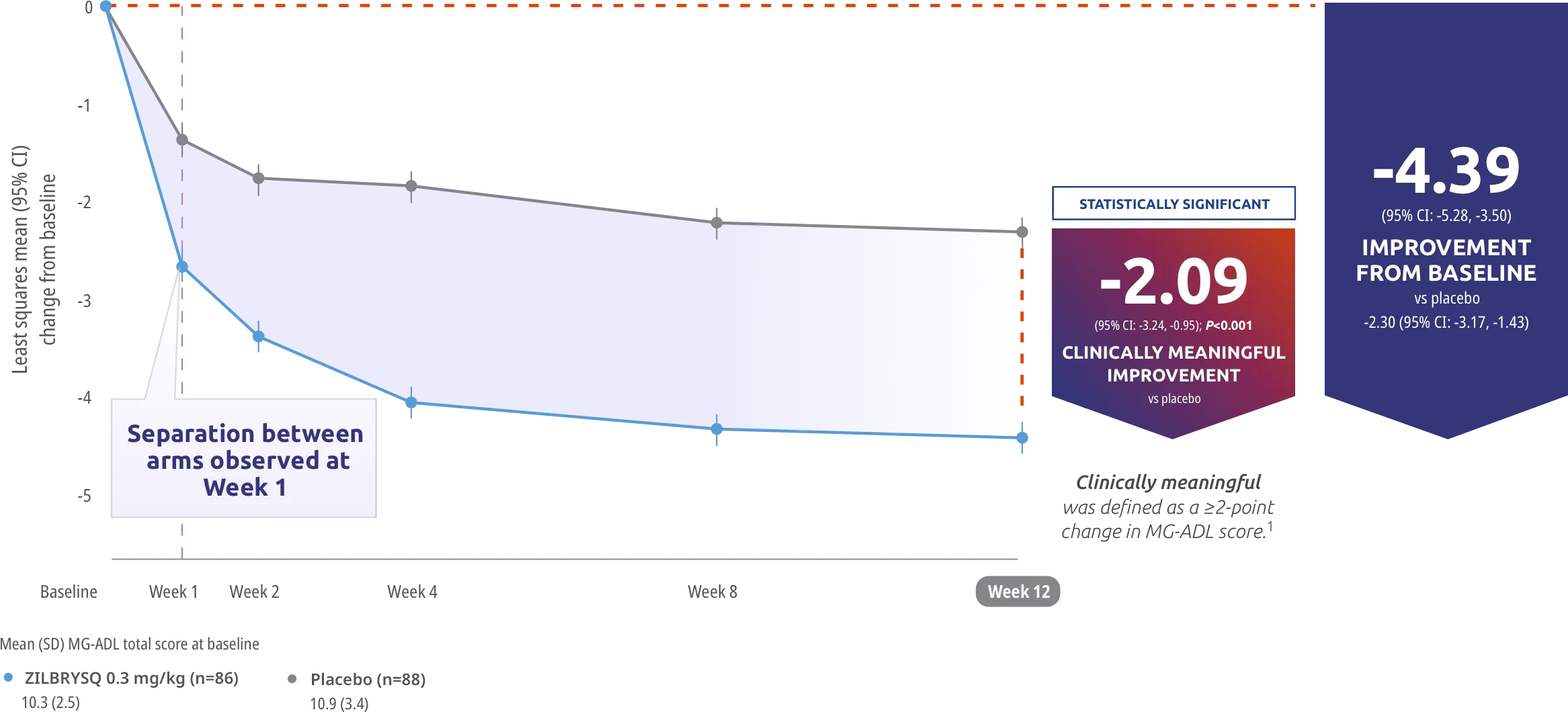
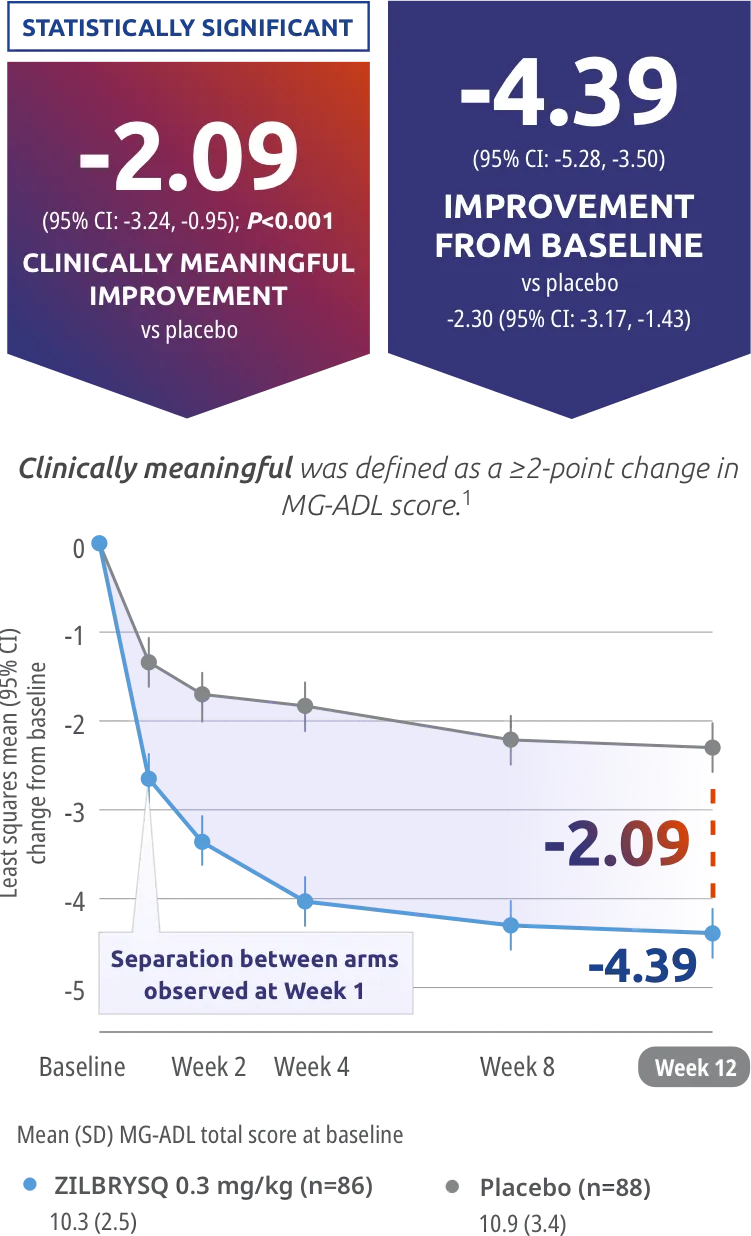
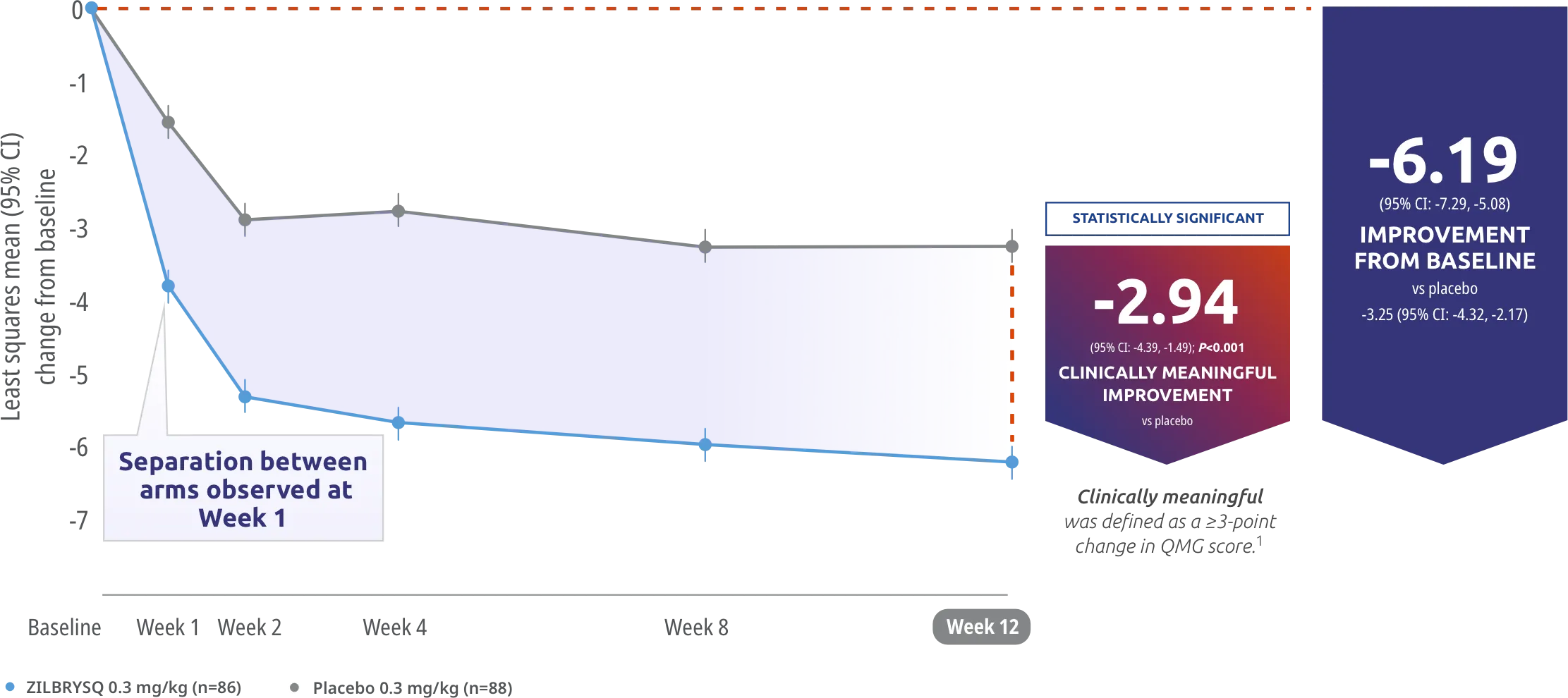
Rapid and statistically significant improvements in MG-ADL total score at Week 12 were clinically meaningful1,3
In the pivotal Phase 3 RAISE trial, ZILBRYSQ delivered a >4-point improvement in the ability to manage activities of daily living at Week 12 for adults with anti-acetylcholine receptor (AChR) antibody positive (Ab+) generalized myasthenia gravis (gMG).
Primary endpoint: Change from baseline (CFB) in Myasthenia Gravis Activities of Daily Living (MG-ADL) total score at Week 12
The most common adverse reactions (reported in at least 10% of patients treated with ZILBRYSQ) were injection site reactions, upper respiratory tract infections, and diarrhea.1
CI=confidence interval; SD=standard deviation.
The safety and efficacy of ZILBRYSQ were evaluated in a 12-week, multicenter, randomized, double-blind, placebo-controlled study. Patient population included adult patients with diagnosis of mild-to-severe gMG (MGFA class II-IV).1
“This kind of potential for meaningful improvement in only 3 months is very appealing to me when I am considering ZILBRYSQ for my patients.”
Watch the video of Dr. Michael Weiss presenting the RAISE and RAISE-XT clinical trials.
Myasthenia Gravis Activities of Daily Living (MG-ADL)
Assesses the impact of gMG on daily functions of 8 symptoms on a scale of 0-3, with total scores ranging from 0 to 24. Higher scores are interpreted as greater impairments.1
- An improvement of ≥2 points was established as clinically meaningful.3
Measures include4:
- Talking
- Chewing
- Swallowing
- Breathing
- Brushing teeth and/or combing hair
- Rising from a chair
- Diplopia
- Eyelid droop
RAISE-XT: Secondary Endpoint MG-ADL
Sustained improvement in MG-ADL total score for over 2 years (Week E108)5,6
The primary endpoint of RAISE-XT evaluated the long-term safety and tolerability of ZILBRYSQ. Please see the results here.
Secondary endpoint: CFB in MG-ADL score in pooled data at Week E108 (mITT population)
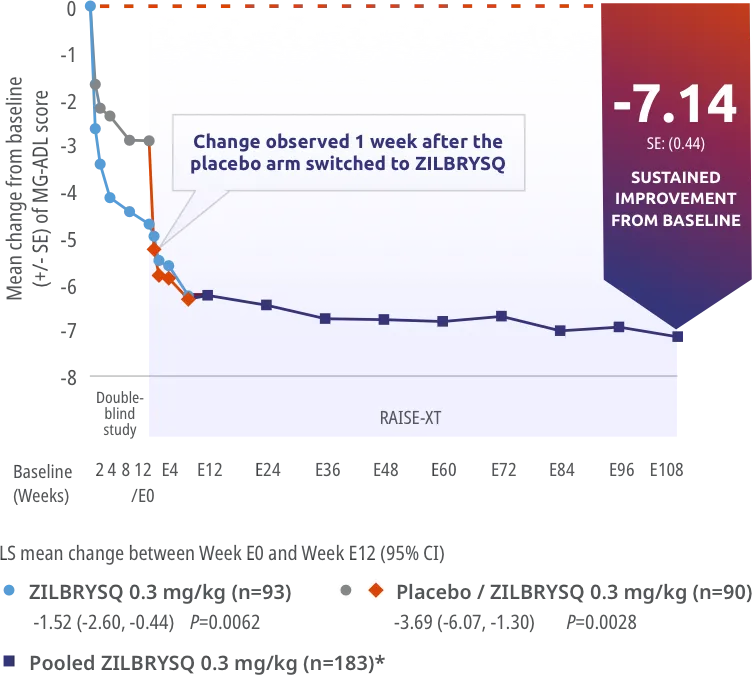
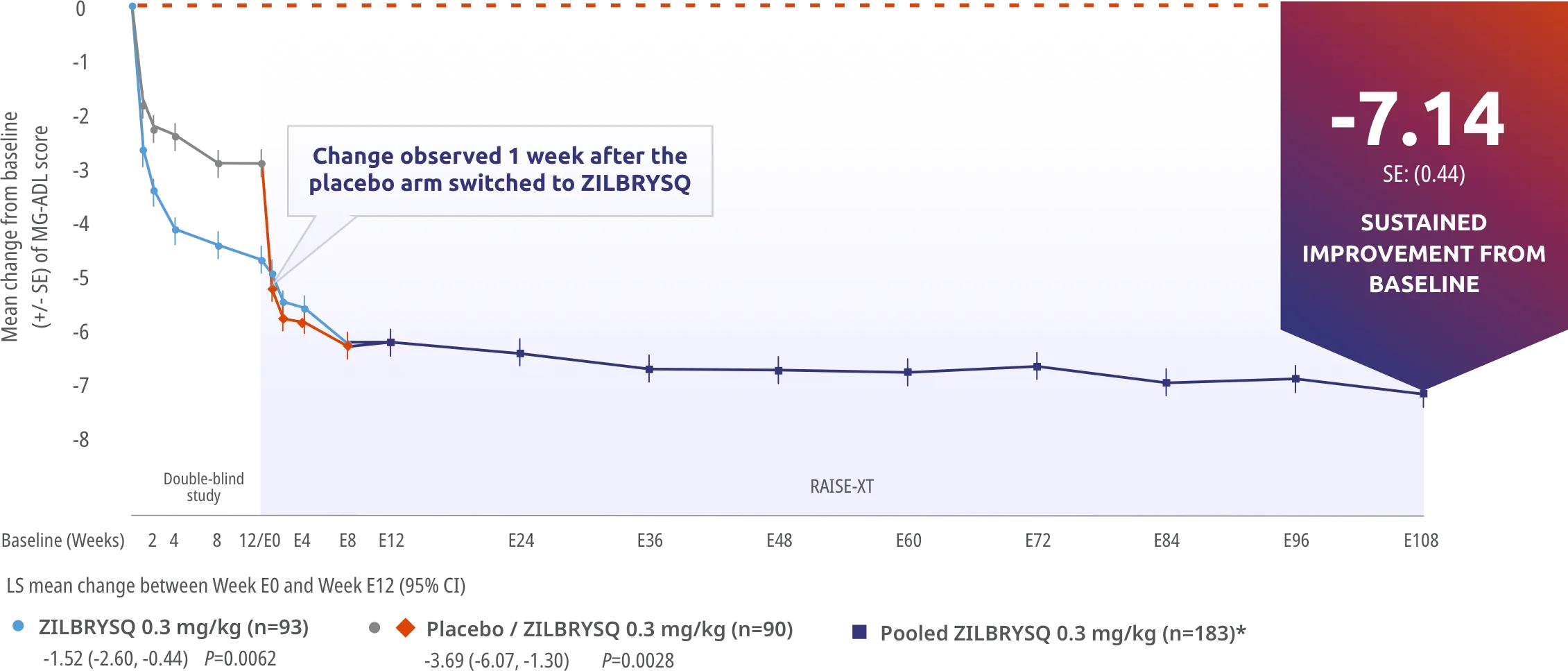
Study Limitations: The open-label extension study was designed to evaluate safety and was not placebo controlled; therefore, efficacy or clinical significance should be interpreted with caution.
The long-term safety, tolerability, and efficacy were evaluated in an open-label extension study comprised of gMG patients who completed either Phase 2 or Phase 3 (RAISE) of the clinical trials.5
RAISE-XT evaluated 200 adult patients from either Phase 2 or 3, including 17 patients from Phase 2 who started with or switched to 0.1 mg/kg. The graphic above shows only the 183 patients continuing or switching to ZILBRYSQ at the approved dosage (0.3 mg/kg) and are solely represented in the subsequent analyses on efficacy. Data cutoff: November 11, 2023.2,5
*Includes pooled data of patients from Week E12-Week E108.6
CI=confidence interval; LS=least squares; mITT=modified intention-to-treat; SE=standard error.
MG-ADL responder rates1,2
A high proportion of patients in either RAISE or RAISE-XT taking ZILBRYSQ were MG-ADL clinical responders (≥3-point improvement from baseline) at Week 12 and Week E108.1,2
Responder rate was specified as an other secondary efficacy endpoint in the RAISE study and an exploratory efficacy endpoint in RAISE-XT. Results should be interpreted with caution.3,5
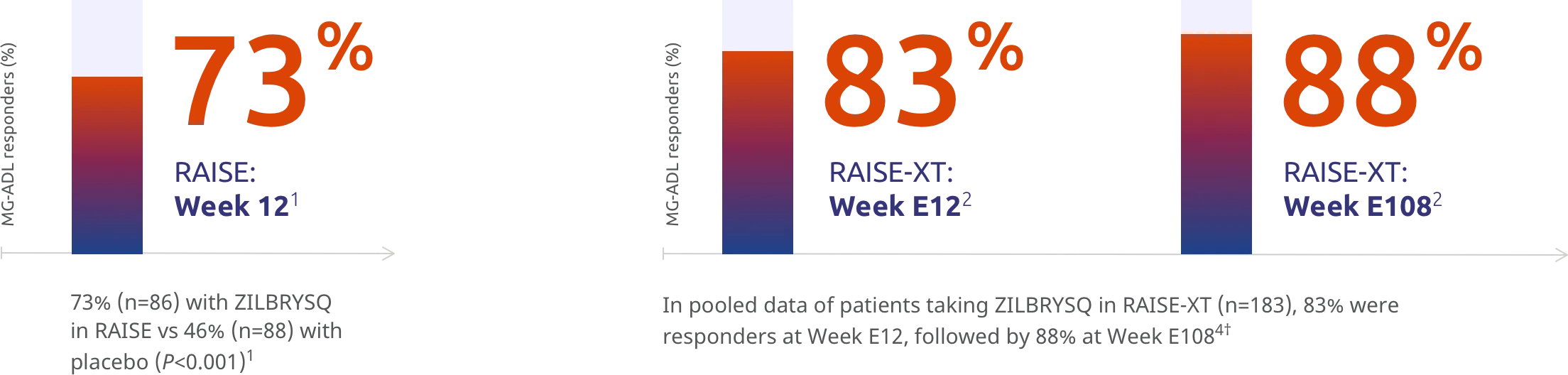
Study Limitations: The open-label extension study was designed to evaluate safety and was not placebo controlled; therefore, efficacy or clinical significance should be interpreted with caution.
Includes pooled data of patients from Phases 2 and 3 of the clinical study who either continued on ZILBRYSQ or switched to ZILBRYSQ from placebo. Data cutoff: November 11, 2023.2
Continue minimal symptom expression (MSE) for over 2 years (Week E108)2
Patients who achieved MSE (mITT population) in either RAISE or RAISE-XT achieved an MG-ADL score of 0 or 1 without rescue therapy.5
MSE was defined as an MG-ADL total score of 0-1. MSE was specified as an other secondary efficacy endpoint in the RAISE study and an exploratory endpoint in RAISE-XT. Results should be interpreted with caution.3,5
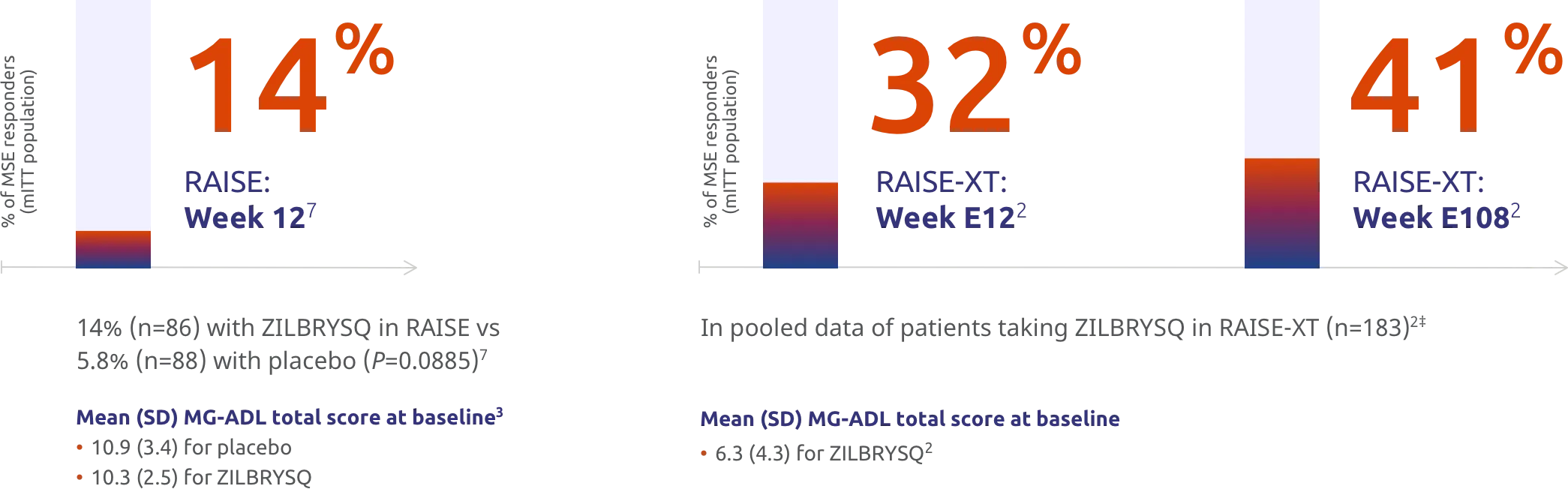
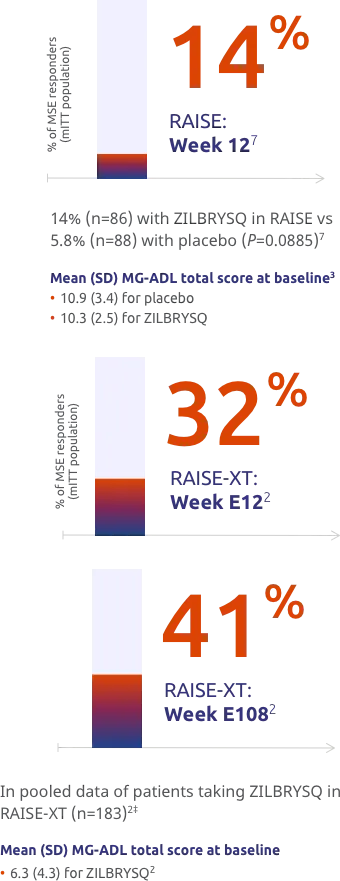
Study Limitations: The open-label extension study was designed to evaluate safety and was not placebo controlled; therefore, efficacy or clinical significance should be interpreted with caution.
Includes pooled data of patients from Week E12-Week E108.2
RAISE-XT evaluated 200 patients from either Phase 2 or 3, including 17 patients from Phase 2 who started with or switched to 0.1 mg/kg. The graphic above shows only the 183 patients continuing or switching to ZILBRYSQ at the approved dosage (0.3 mg/kg) and are solely represented in the subsequent analyses on efficacy. Data cutoff: November 11, 2023.2,5
mITT=modified intention-to-treat.
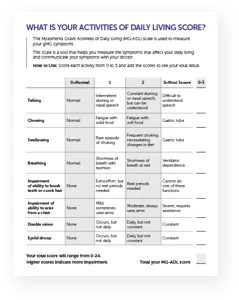
Encourage your patients to keep track of gMG symptoms between appointments.
The efficacy and safety of ZILBRYSQ for the treatment of generalized myasthenia gravis (gMG) in adult patients who are anti-acetylcholine receptor (AChR) antibody positive (Ab+) were established in RAISE, a 12-week, multicenter, randomized, double-blind, placebo-controlled study. A total of 174 patients were randomized to receive either ZILBRYSQ (n=86) or placebo (n=88).1,3

RAISE secondary endpoints
RAISE: improvements across key clinician- and patient-reported secondary and other outcome measures at Week 121,3
Statistically significant and clinically meaningful improvement in muscle strength at Week 121,3
Secondary endpoint: CFB in QMG score at Week 12
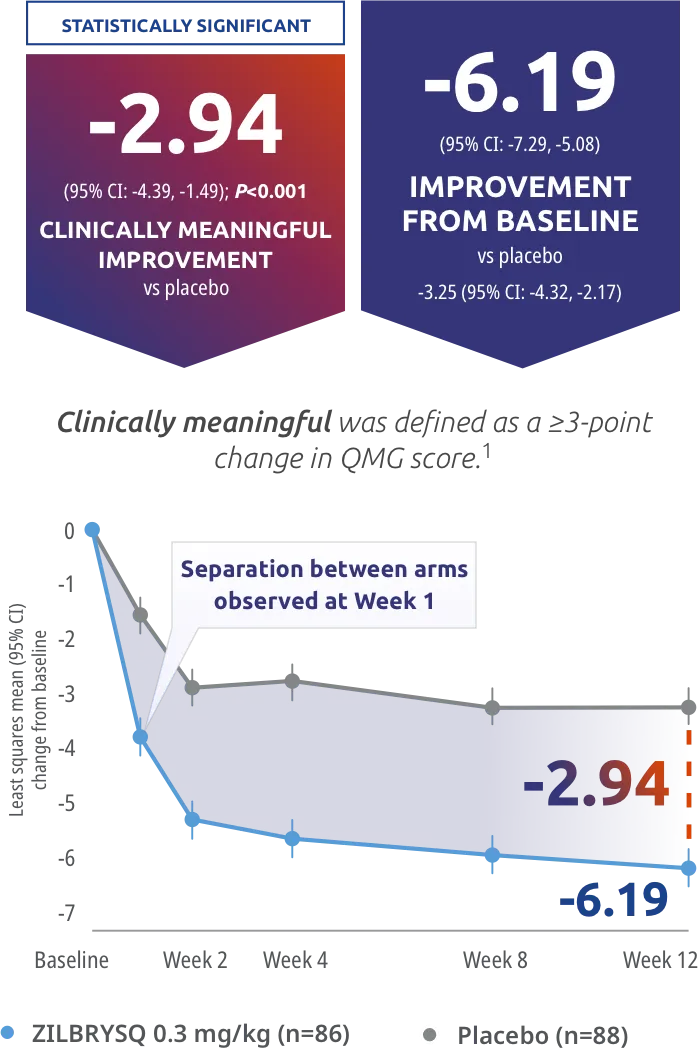
The safety and efficacy of ZILBRYSQ were evaluated in a 12-week, multicenter, randomized, double-blind, placebo-controlled study. Patient population included adult patients with diagnosis of mild-to-severe gMG (MGFA class II-IV).1
CFB=change from baseline; CI=confidence interval; MGFA=Myasthenia Gravis Foundation of America.
Statistically significant and clinically meaningful improvement in gMG signs and symptoms at Week 123
Secondary endpoint: CFB in MGC score at Week 123
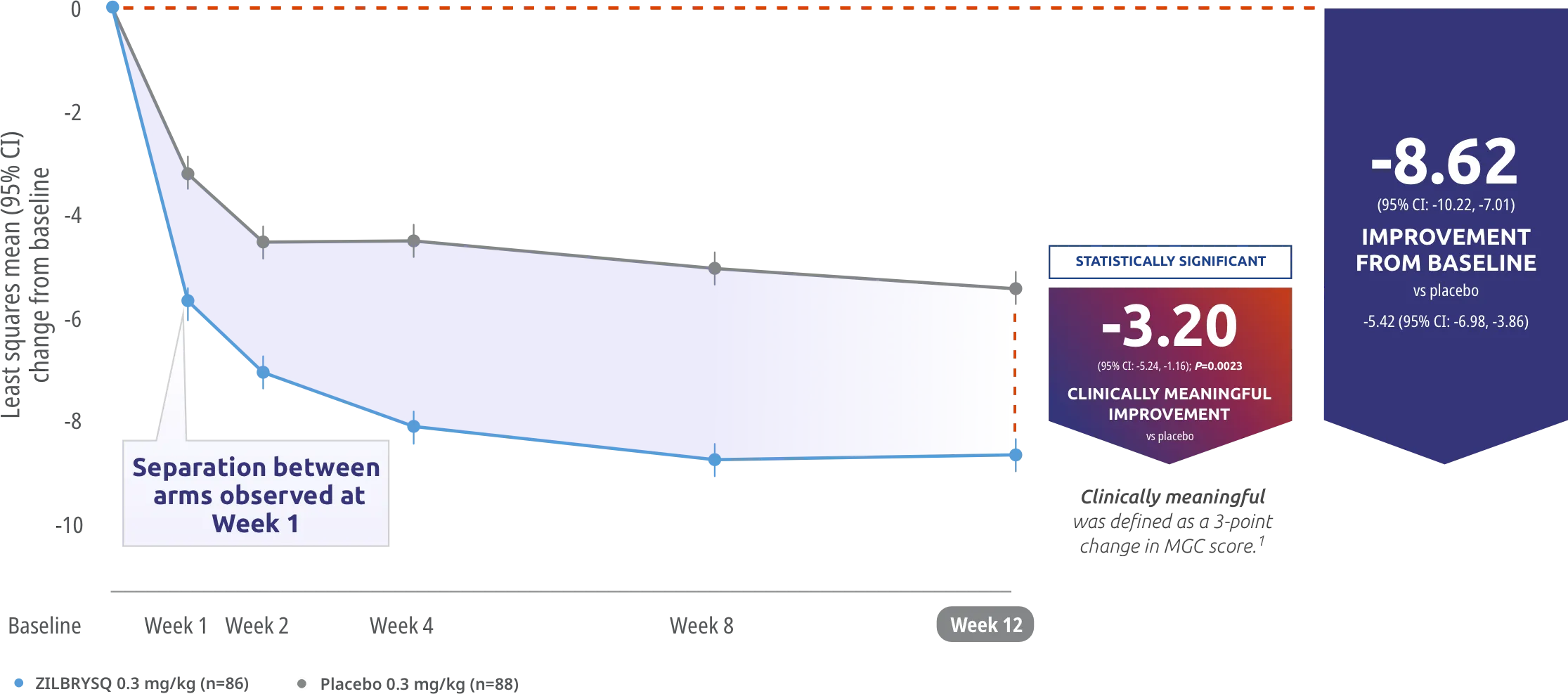
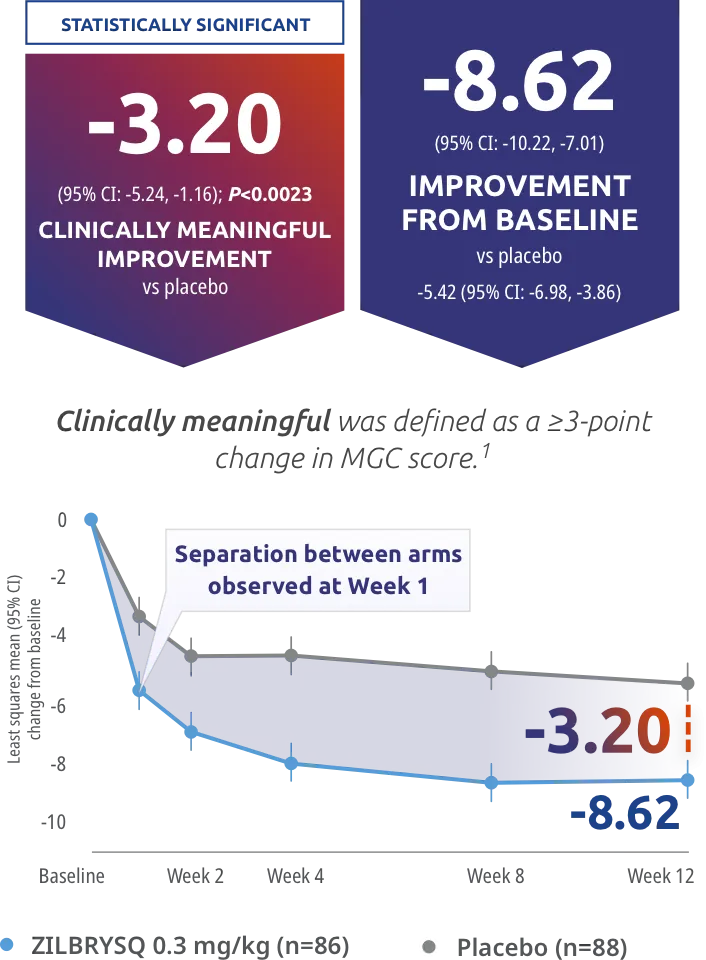
The safety and efficacy of ZILBRYSQ were evaluated in a 12-week, multicenter, randomized, double-blind, placebo-controlled study. Patient population included adult patients with diagnosis of mild to severe gMG (MGFA class II-IV).1
CFB=change from baseline; CI=confidence interval; MGFA=Myasthenia Gravis Foundation of America.
Statistically significant improvements in quality of life at Week 123
Secondary endpoint: CFB in MG-QoL 15r score at Week 123
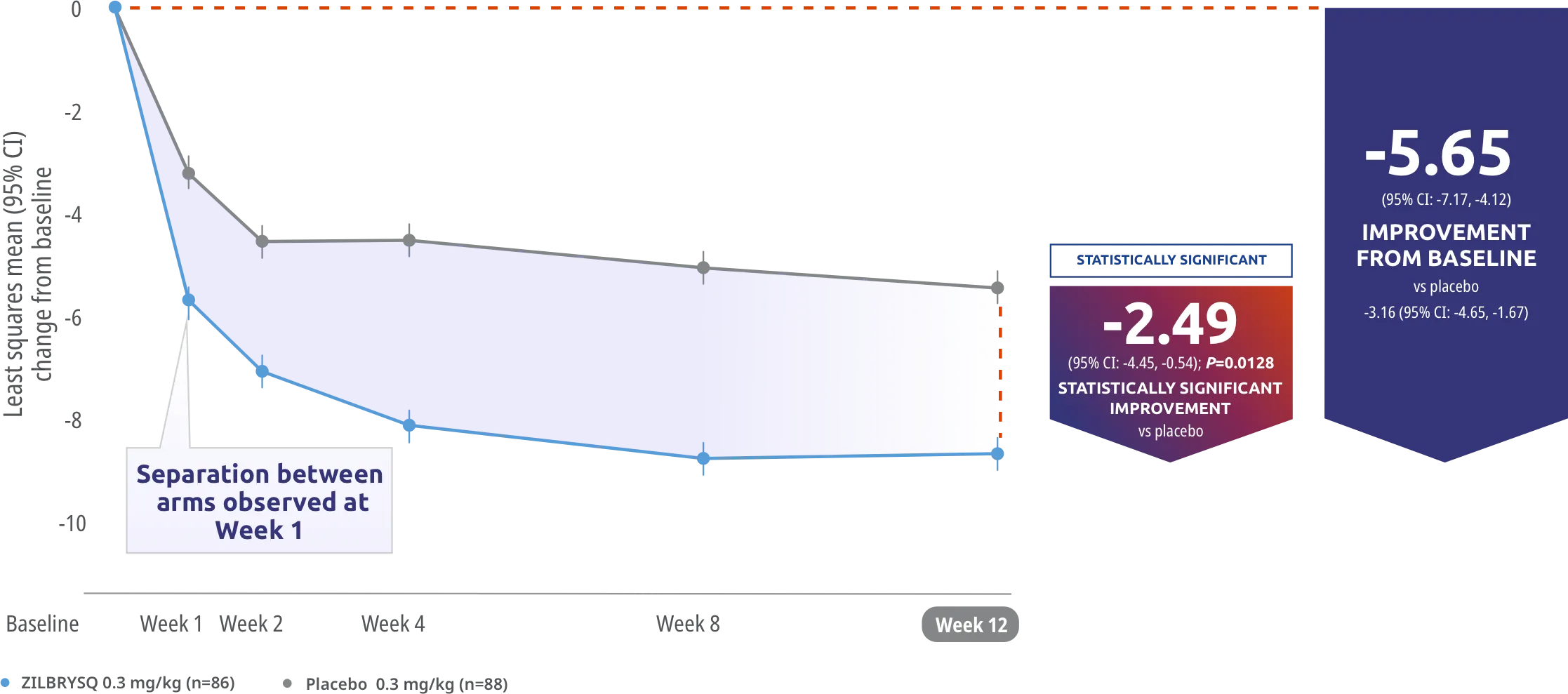
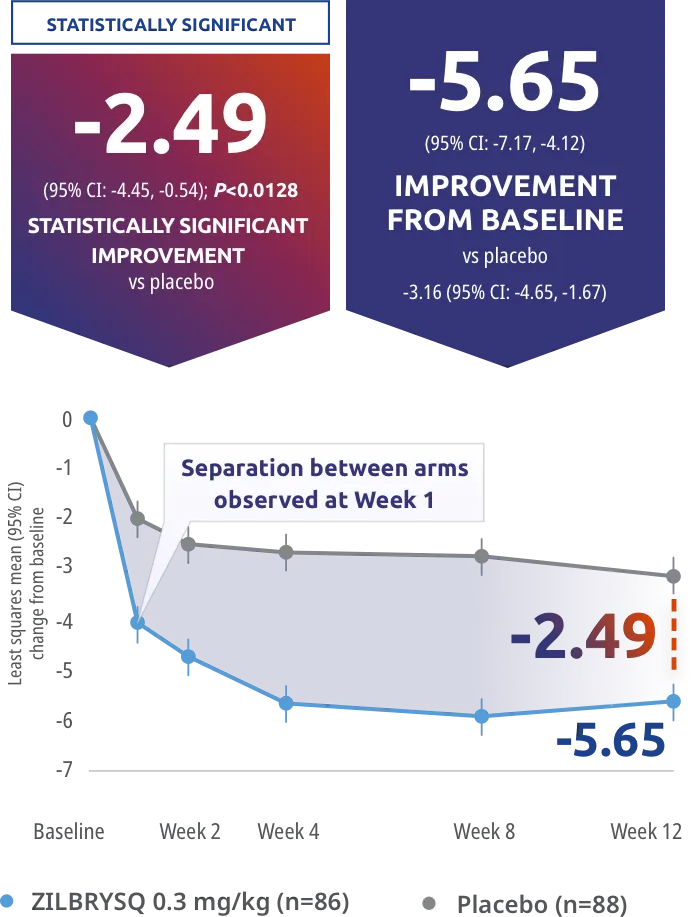
Study Limitations: At the time of the study, no threshold for clinical meaningfulness for the MG-QoL 15r assessment had been established.3
The safety and efficacy of ZILBRYSQ were evaluated in a 12-week, multicenter, randomized, double-blind, placebo-controlled study. Patient population included adult patients with diagnosis of mild-to-severe gMG (MGFA class II-IV).1
CFB=change from baseline; CI=confidence interval; MGFA=Myasthenia Gravis Foundation of America.
RAISE secondary endpoint measures overview
Quantitative Myasthenia Gravis (QMG)
A physician assessment that quantifies disease severity. Measures are assessed on a scale of 0-3, with total scores ranging from 0 to 39.1
- Improvement of ≥3 points was established as clinically meaningful3
Measures include4:
- Ptosis
- Facial muscle weakness
- Dysarthria
- Grip strength
- Neck flexion endurance
- Diplopia
- Difficulty swallowing 4 oz of water
- Percentage predicted forced vital capacity
- Arm and leg endurance
Myasthenia Gravis Composite (MGC)
A 10-item patient and physician assessment of the signs and symptoms of MG, with total scores ranging from 0 to 50. Higher scores are interpreted as greater impairments.5
- Improvement of ≥3 points was established as clinically meaningful3
Measures include5:
- Ptosis
- Eye closure
- Chewing
- Breathing
- Shoulder abduction
- Diplopia
- Talking
- Swallowing
- Neck flexion/extension
- Hip flexion
Myasthenia Gravis Quality of Life 15-item revised (MG-QoL 15r) scale
A 15-item questionnaire that allows clinicians to estimate a patient’s quality of life relevant to MG. Items are scored from 0 (not at all) to 2 (very much). Cumulative scores range from 0 to 30, with higher scores representing worse quality of life.6
- Clinically meaningful was not defined for the MG-QoL 15r assessment3
Measures include6:
- Frustration
- Trouble eating
- Limitations at work
- Hobby and activity enjoyment
- Depression
- Mobility
- Personal grooming
- Loss of independence
RAISE-XT is an extension study of adult patients who opted to continue on ZILBRYSQ or switch to ZILBRYSQ from placebo. The primary objective was to evaluate the long-term safety and tolerability of ZILBRYSQ in study participants with generalized myasthenia gravis (gMG). Long-term efficacy was also studied through multiple measures as secondary endpoints.3
Additional RAISE-XT secondary endpoints
RAISE-XT: consistent improvements across key clinician- and patient-reported secondary and other outcome measures2‑6
Sustained efficacy in QMG total score for over 2 years (Week E108)3,4
Secondary endpoint: CFB in the QMG total score at Week E108 (mITT population)3*
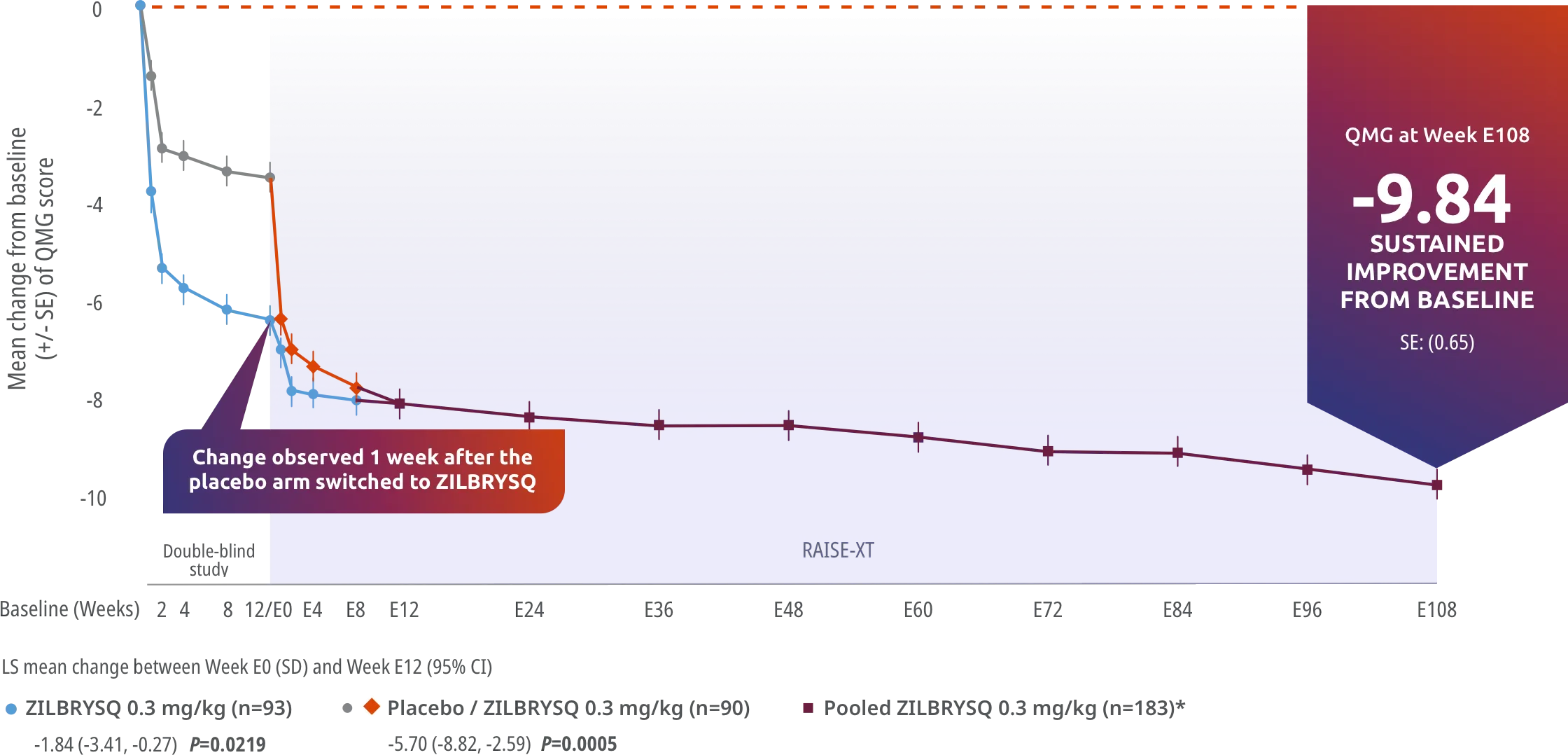
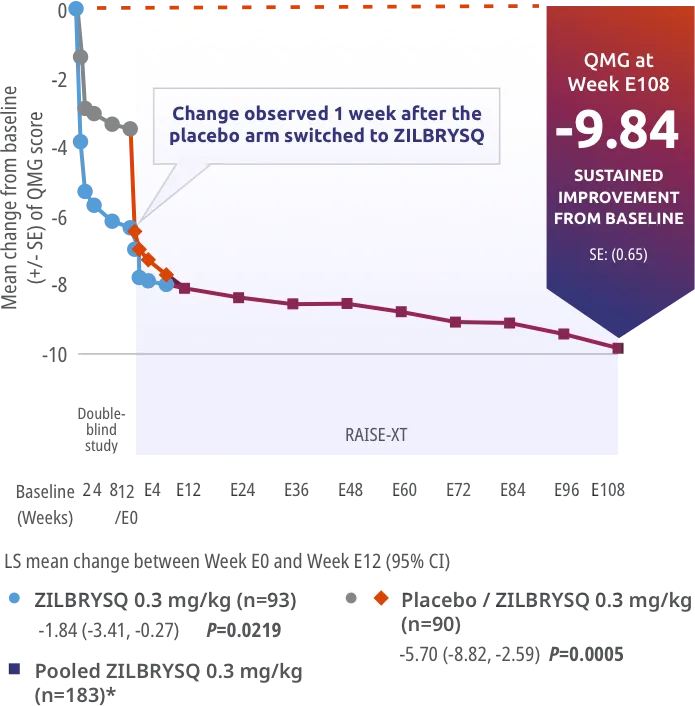
Study Limitations: The open-label extension study was designed to evaluate safety and was not placebo controlled; therefore, efficacy or clinical significance should be interpreted with caution.
The long-term safety, tolerability, and efficacy were evaluated in an open-label extension study comprised of gMG patients who participated in either Phase 2 or Phase 3 (RAISE) of the clinical trials.3
RAISE-XT evaluated 200 adult patients from either Phase 2 or 3, including 17 patients from Phase 2 who started with or switched to 0.1 mg/kg. The graphic above shows only the 183 patients continuing or switching to ZILBRYSQ at the approved dosage (0.3 mg/kg) and are solely represented in the subsequent analyses on efficacy. Data cutoff: November 11, 2023.2,3
*Includes pooled data of patients from Week E12-Week E108.4
CFB=change from baseline; CI=confidence interval; LS=least squares; mITT=modified intention-to-treat; SD=standard deviation; SE=standard error.
Sustained efficacy in MGC total score for over 2 years (Week E108)2,3
Secondary endpoint: CFB in the MGC total score in pooled data at Week E108 (mITT population)*
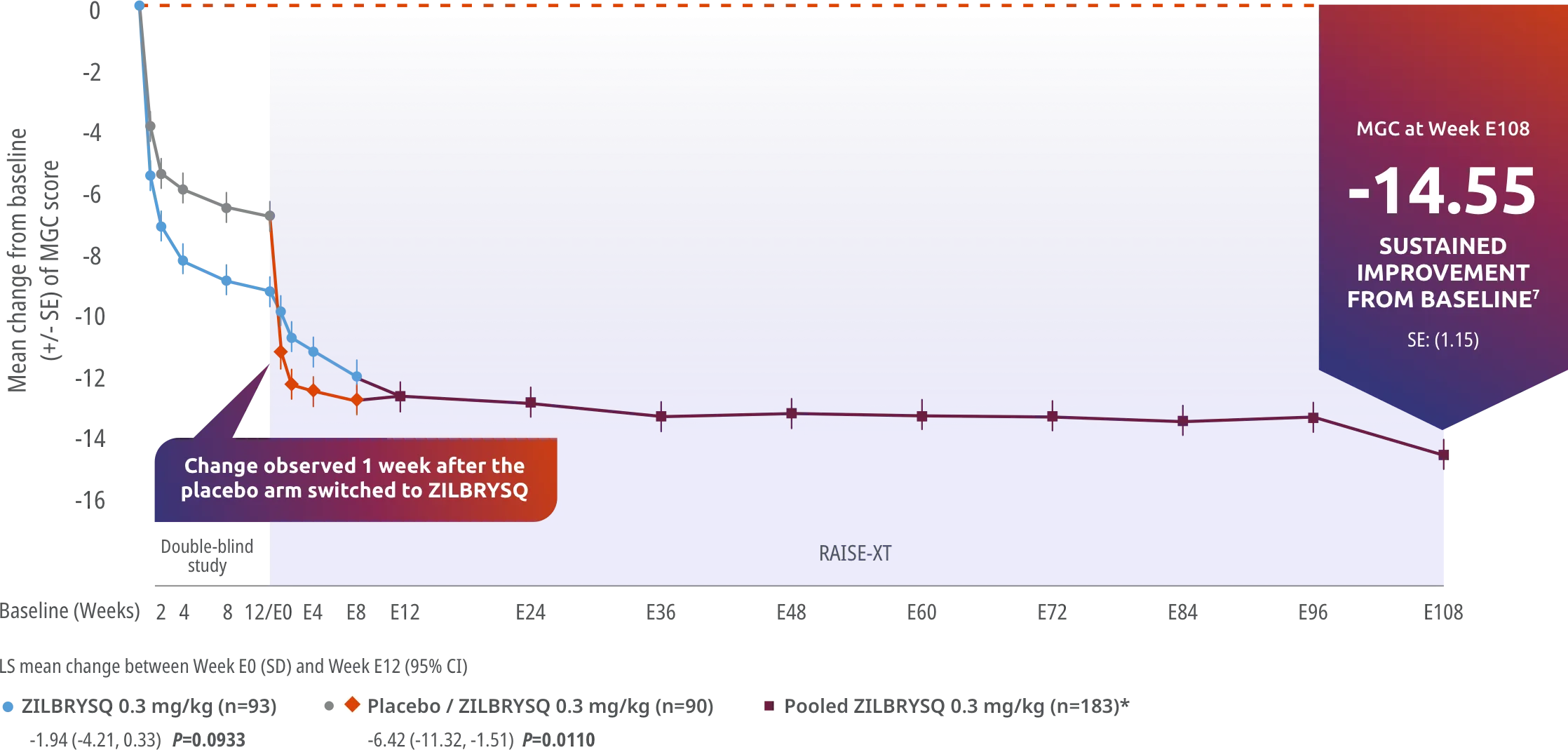
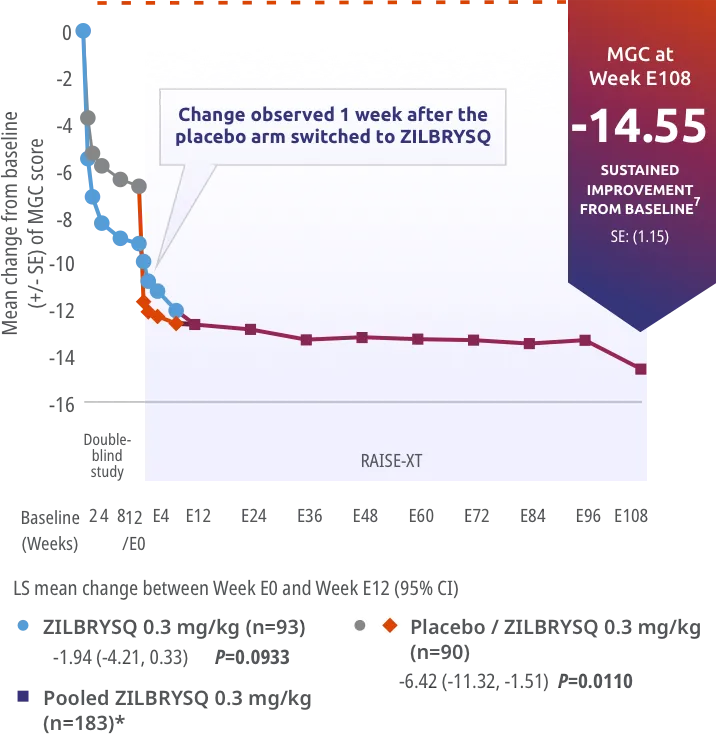
Study Limitations: The open-label extension study was designed to evaluate safety and was not placebo controlled; therefore, efficacy or clinical significance should be interpreted with caution.
The long-term safety, tolerability, and efficacy were evaluated in an open-label extension study comprised of gMG patients who participated in either Phase 2 or Phase 3 (RAISE) of the clinical trials.3
RAISE-XT evaluated 200 adult patients from either Phase 2 or 3, including 17 patients from Phase 2 who started with or switched to 0.1 mg/kg. The graphic above shows only the 183 patients continuing or switching to ZILBRYSQ at the approved dosage (0.3 mg/kg) and are solely represented in the subsequent analyses on efficacy. Data cutoff: November 11, 2023.2,3
Includes pooled data of patients from Week E12-Week E108.2
CFB=change from baseline; CI=confidence interval; LS=least squares; mITT=modified intention-to-treat; SD=standard deviation; SE=standard error.
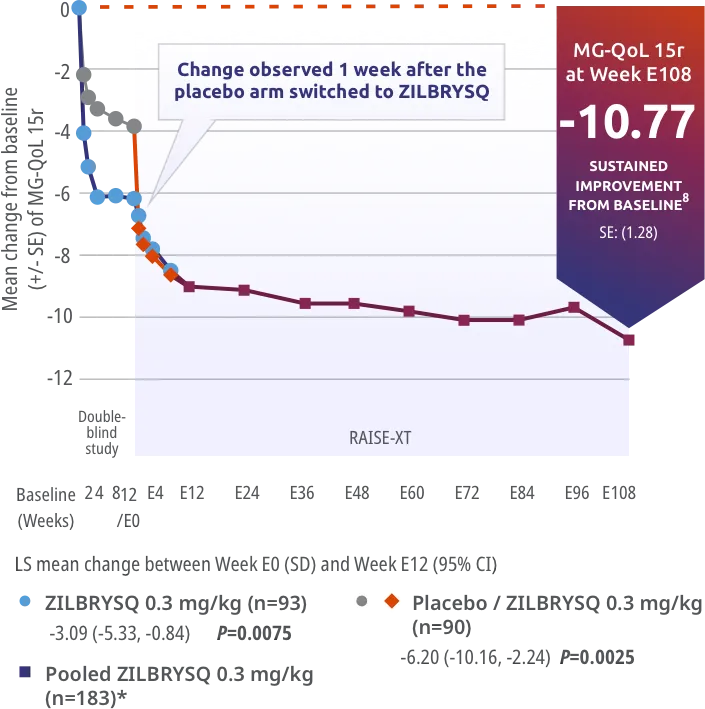
Sustained efficacy in MG-QoL 15hr total score for over 2 years (Week E108)2,3
Secondary endpoint: CFB in the MG-QoL 15r total score in pooled data at Week E108 (mITT population)*
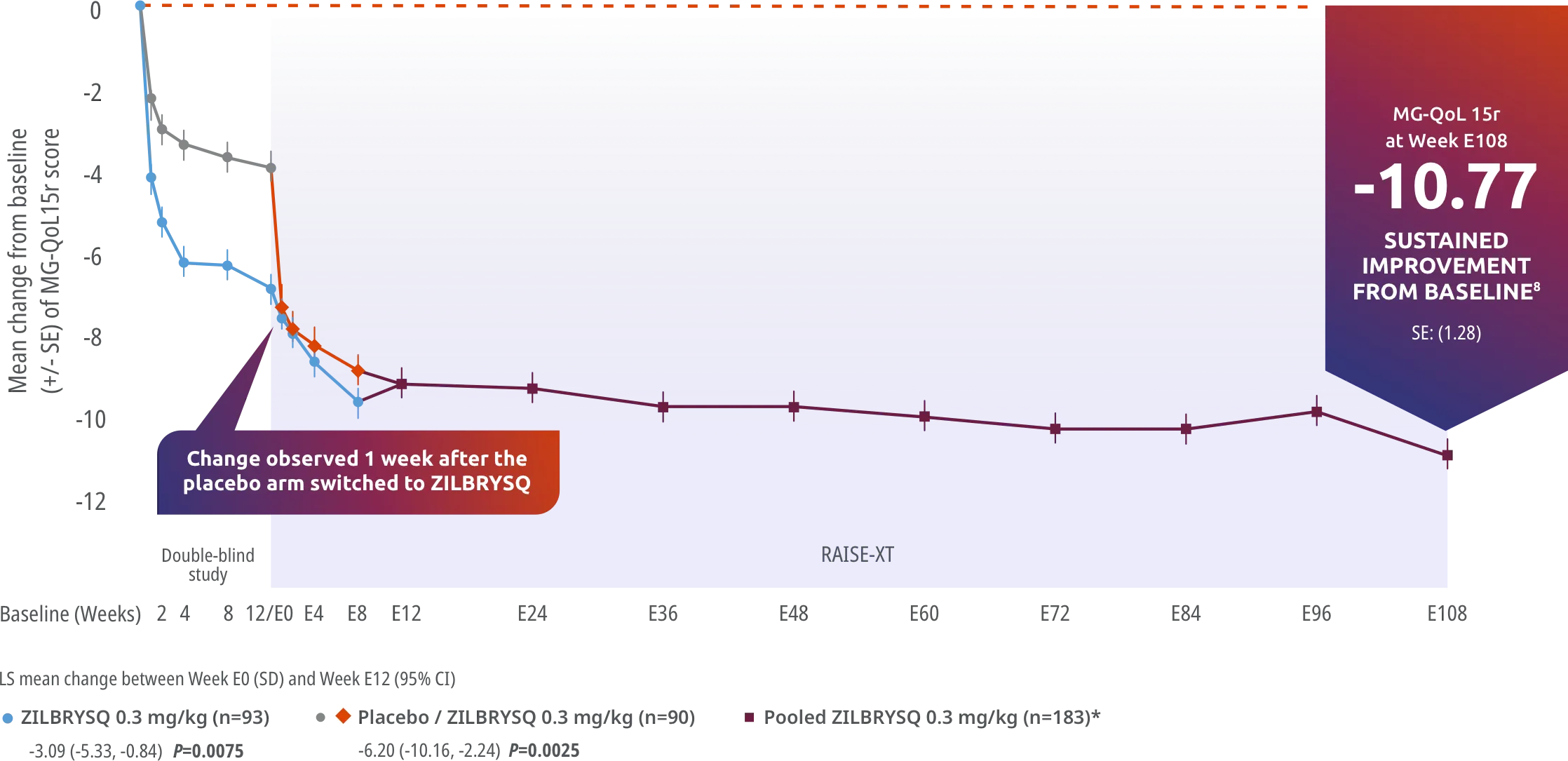
Study Limitations: The open-label extension study was designed to evaluate safety and was not placebo controlled; therefore, efficacy or clinical significance should be interpreted with caution.
The long-term safety, tolerability, and efficacy were evaluated in an open-label extension study comprised of gMG patients who participated in either Phase 2 or Phase 3 (RAISE) of the clinical trials.3
RAISE-XT evaluated 200 patients from either Phase 2 or 3, including 17 patients from Phase 2 who started with or switched to 0.1 mg/kg. The graphic above shows only the 183 patients continuing or switching to ZILBRYSQ at the approved dosage (0.3 mg/kg) and are solely represented in the subsequent analyses on efficacy. Data cutoff: November 11, 2023.2,3
Includes pooled data of patients from Week E12-Week E108.2
CFB=change from baseline; CI=confidence interval; LS=least squares; mITT=modified intention-to-treat; SD=standard deviation; SE=standard error.
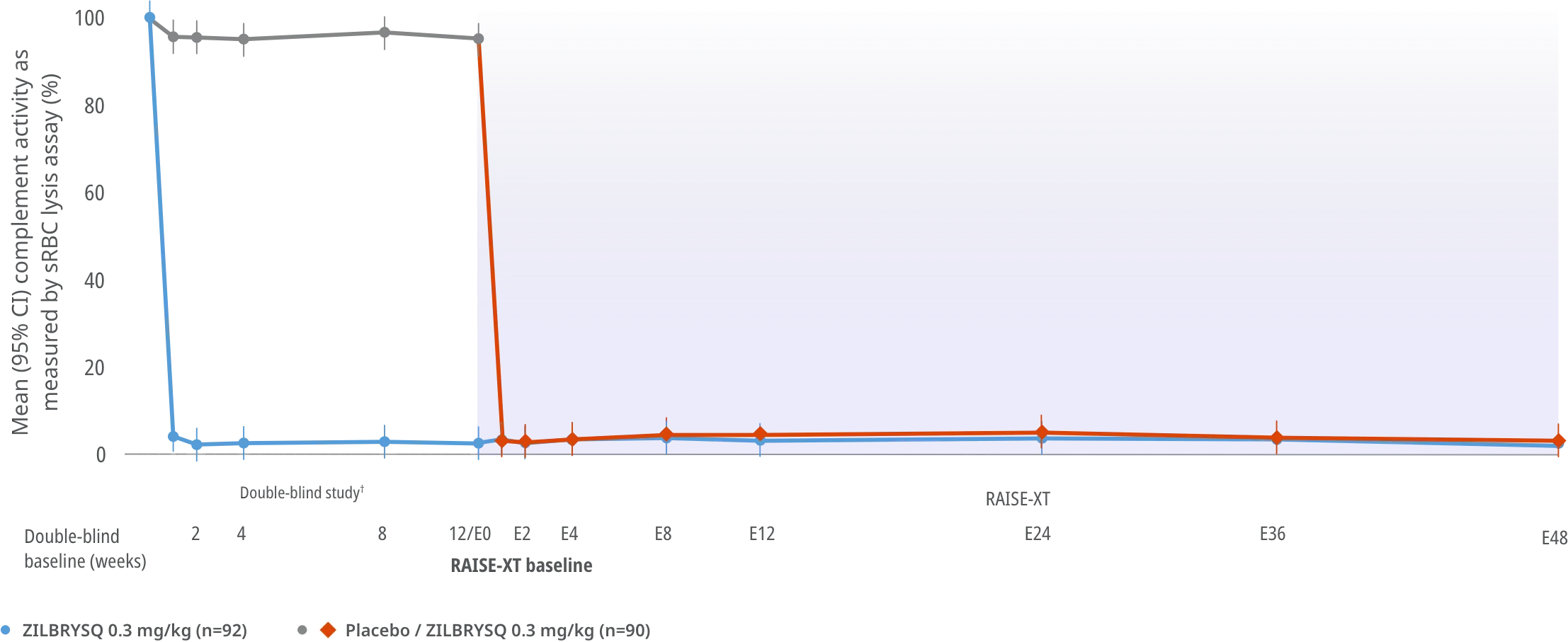
RAISE-XT other endpoint:
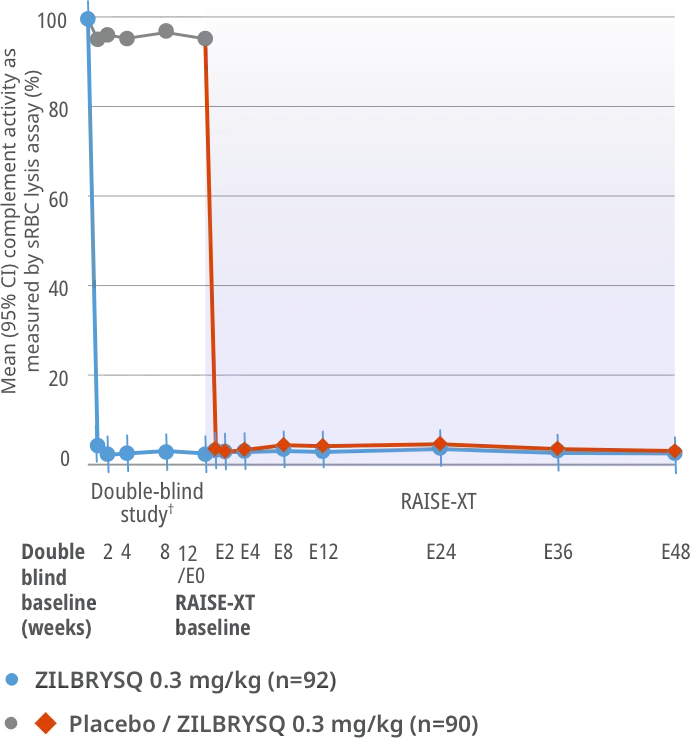
Complement inhibition was achieved after Week 1 and sustained through Week E483*
Complement activity as shown by sRBC lysis assay
Study Limitations: The open-label extension study was designed to evaluate safety and was not placebo controlled; therefore, efficacy or clinical significance should be interpreted with caution.
Assessment of complement activity using sRBC lysis assay was a pharmacodynamics outcome.3
In RAISE-XT, Week E48 was the data cut (September 8, 2022) for the assessment of complement activity.3
RAISE-XT is an ongoing, multicenter, open-label extension study of ZILBRYSQ in study participants with anti-AChR Ab+ gMG who completed the Phase 2 or Phase 3 (RAISE) study (N=200). The analysis cutoff date was September 8, 2022.3
The safety and efficacy of ZILBRYSQ were evaluated in RAISE, a 12-week, multicenter, randomized, double-blind, placebo-controlled study. The patient population included adult patients with a diagnosis of mild-to-severe gMG (MGFA class II-IV).1
Ab+=antibody positive; AChR=acetylcholine receptor; CI=confidence interval; MGFA=Myasthenia Gravis Foundation of America; sRBC=sheep red blood cell.
RAISE-XT post hoc data:
Post hoc analysis of exploratory endpoint: Complement inhibition was maintained during concomitant use of ZILBRYSQ with IVIg and PLEX3,5
Mean complement inhibition pre- and post-rescue
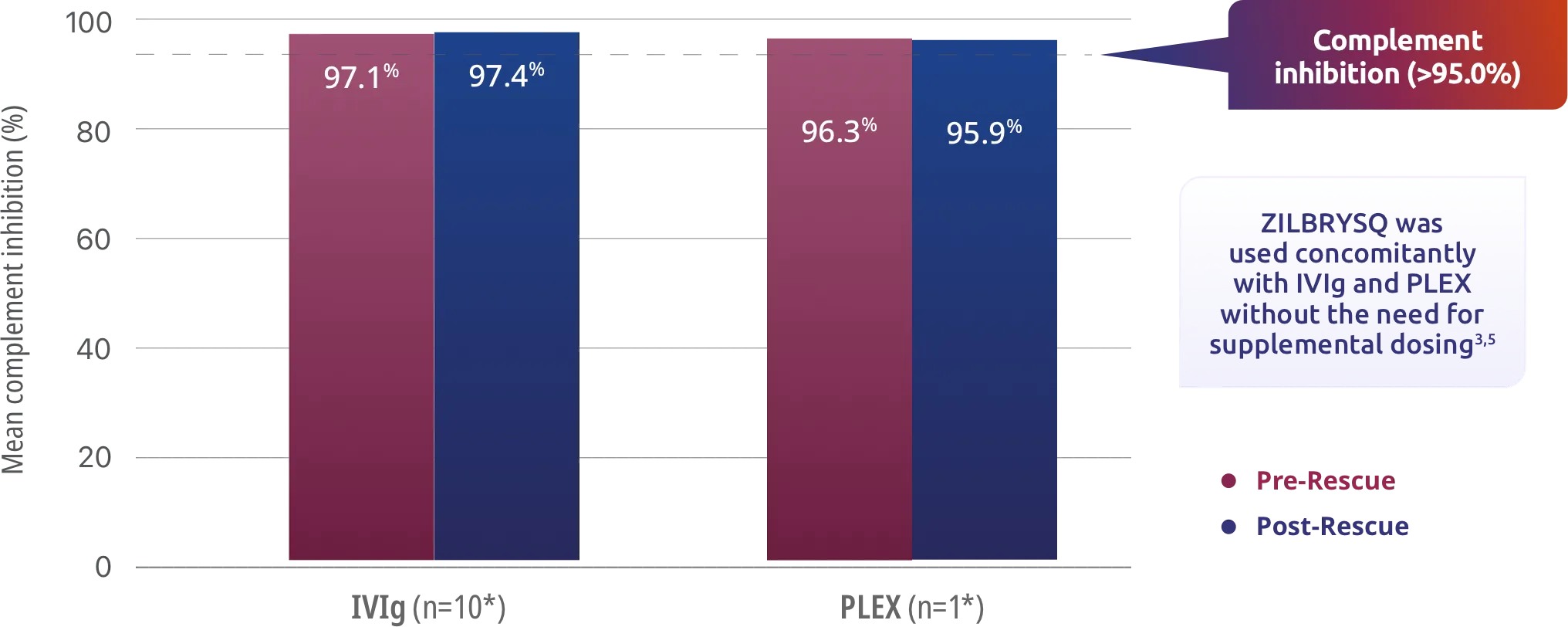
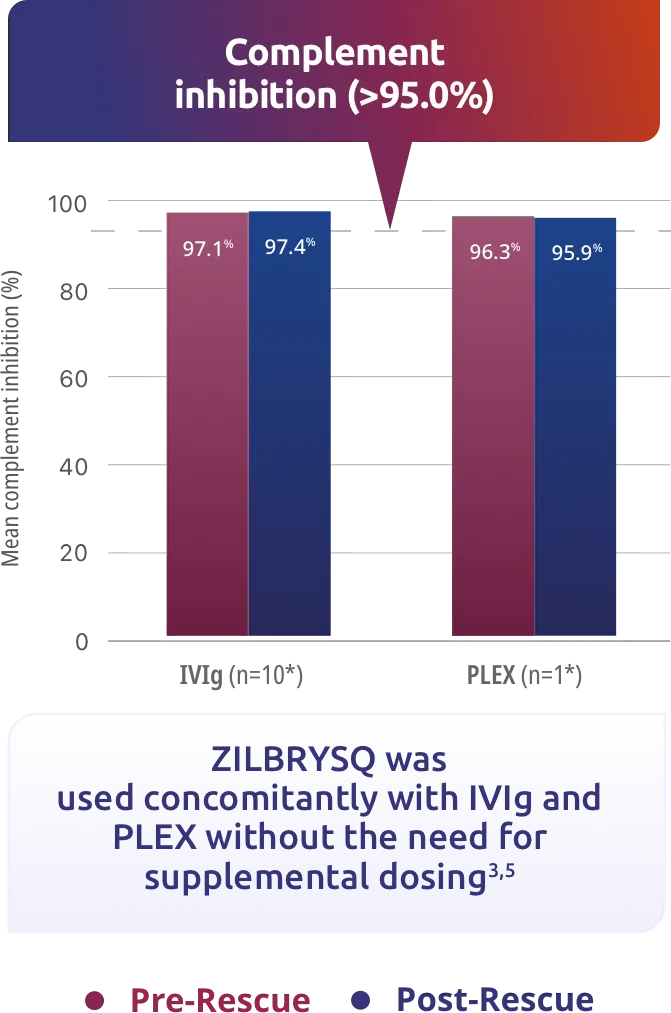
Assessment of complement activity using sRBC lysis assay was a pharmacodynamics outcome.3,5
Study Limitations: The open-label extension study was designed to evaluate safety and was not placebo controlled.
The data was from a post hoc analysis based on a prespecified exploratory endpoint not controlled for multiplicity and not powered.
Efficacy or clinical significance should be interpreted with caution and conclusions cannot be drawn.
RAISE-XT is an ongoing, multicenter, open-label extension study of ZILBRYSQ in adult study participants with anti-AChR Ab+ gMG who completed Phase 2 or Phase 3 (RAISE) study (N=200). The analysis cutoff date was September 8, 2022.3
Events with available data. Complement activity was measured by sRBC lysis assay, with post-administration measurement taken up to 1 day after rescue treatment. Data cutoff: September 8, 2022.5
Ab+=antibody positive; AChR=acetylcholine receptor; IVIg=intravenous immunoglobulin; PLEX=plasma exchange; sRBC=sheep red blood cell.
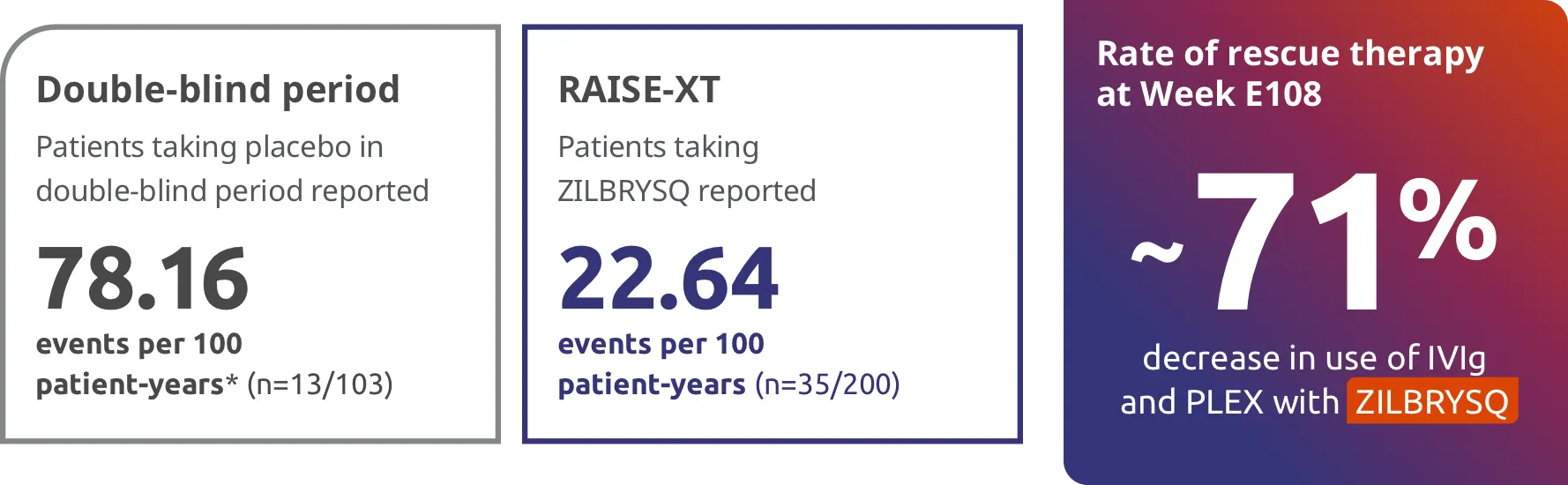
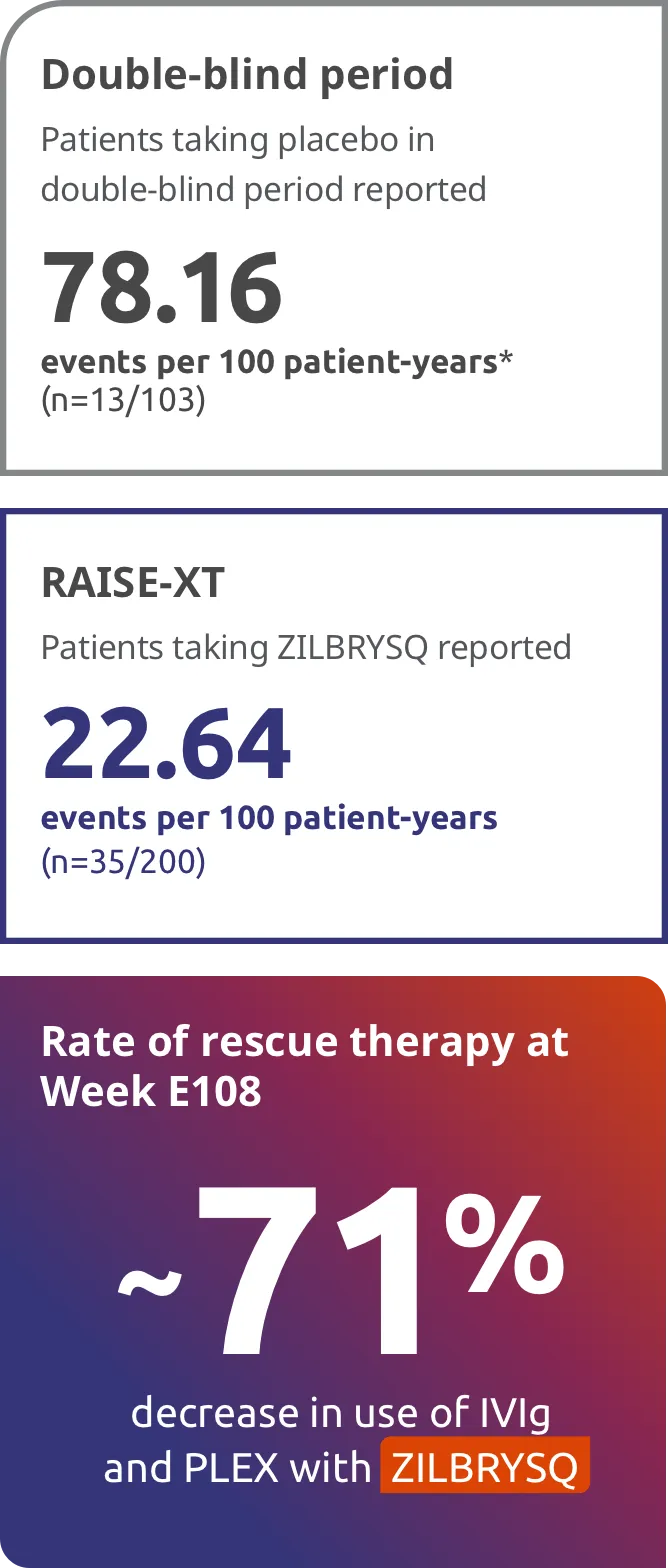
Post hoc analysis of secondary endpoint: use of rescue therapy in RAISE-XT for over 2 years (Week E108)6,9
Study Limitations: The open-label extension study was designed to evaluate safety and was not placebo controlled.
The data was from a post hoc analysis based on a prespecified secondary endpoint not controlled for multiplicity and not powered.
Efficacy or clinical significance should be interpreted with caution and conclusions cannot be drawn.
In RAISE, a 12-week, multicenter, randomized, double-blind, placebo-controlled study to evaluate the efficacy and safety of ZILBRYSQ, the cumulative proportion of patients receiving rescue therapy (other secondary efficacy outcome) by Week 12 was 12% for the placebo group (n=88) and 5% for the ZILBRYSQ group (n=86) (P=0.1003).6
Patients who switched from placebo to ZILBRYSQ in RAISE-XT had ~70% decrease in utilization of IVIg and PLEX compared to the double-blind period at the time of data cutoff (November 11, 2023) (median exposure 2.2 [range: 0.1-5.6] years).9
Double-blind period: Weeks 0-12. The rate of rescue therapy use during the double-blind period was adjusted for exposure.3
IVIg=intravenous immunoglobulin; PLEX=plasma exchange.
Post hoc analysis of exploratory endpoint: MSE response for over 2 years (Week E108)10*
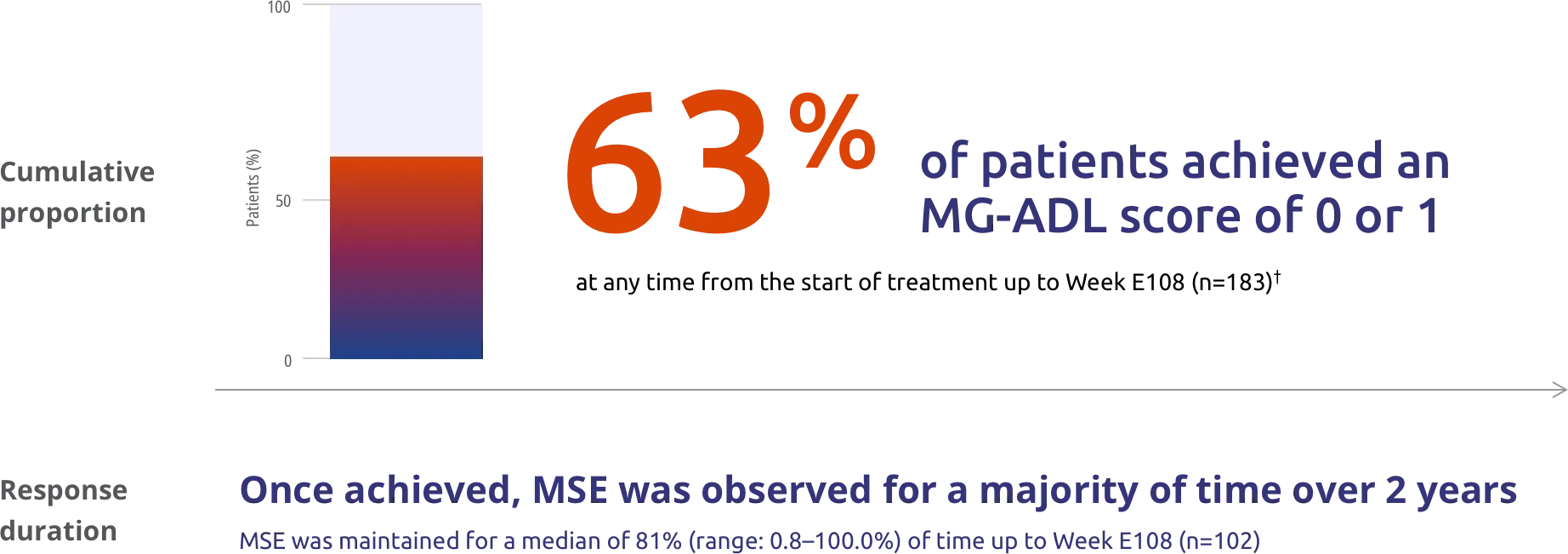
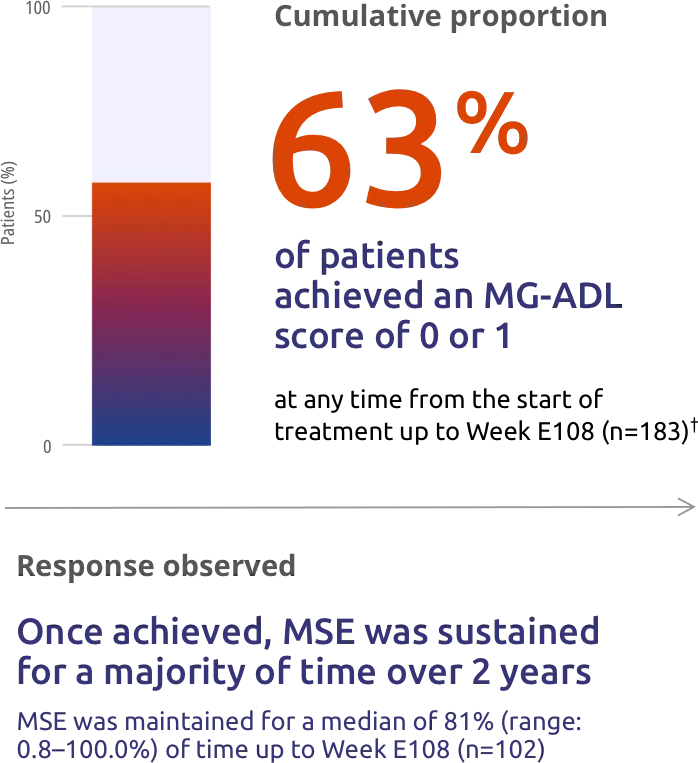
MSE (mITT population) was defined as an MG-ADL total score of 0-1. MSE was specified as an other secondary efficacy endpoint in the RAISE study and an exploratory endpoint in RAISE-XT. Results should be interpreted with caution.3,6
Study Limitations: The open-label extension study was designed to evaluate safety and was not placebo controlled.
The data was from a post hoc analysis based on a prespecified exploratory endpoint not controlled for multiplicity and not powered.
Efficacy or clinical significance should be interpreted with caution and conclusions cannot be drawn.
RAISE-XT is an ongoing, multicenter, open-label extension study of ZILBRYSQ in adult study participants with anti-AChR Ab+ gMG who completed the Phase 2 or Phase 3 (RAISE) study (N=200). The analysis cutoff date was November 11, 2023.3,10
Includes patients who completed Phases 2 and 3 of the clinical study and either continued or switched to ZILBRYSQ from placebo for the open-label extension.10
Ab+=antibody positive; AChR=acetylcholine receptor; MG-ADL=Myasthenia Gravis Activities of Daily Living; mITT=modified intention-to-treat; MSE=minimal symptom expression.
Post hoc analysis of exploratory endpoint: change in corticosteroid dose for over 2 years (Week E108)11*
Proportion of patients with reduced or discontinued corticosteroid dose compared to double-blind baseline†
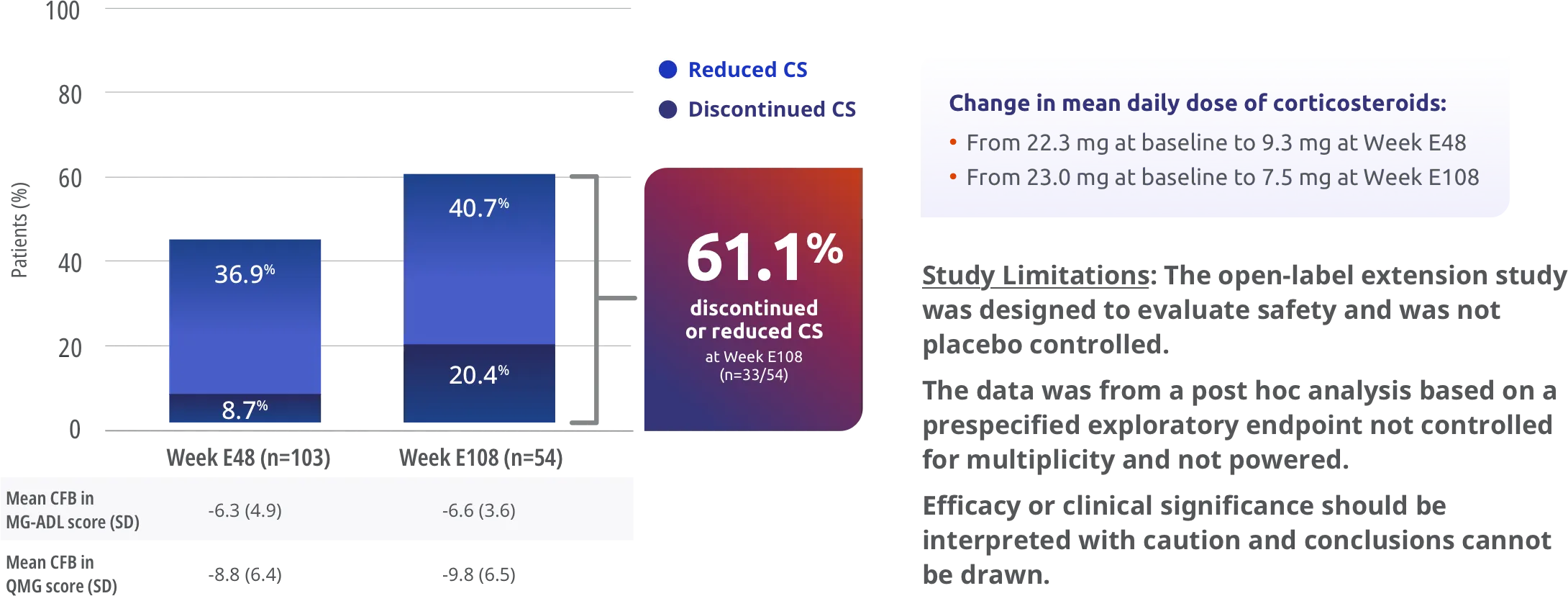
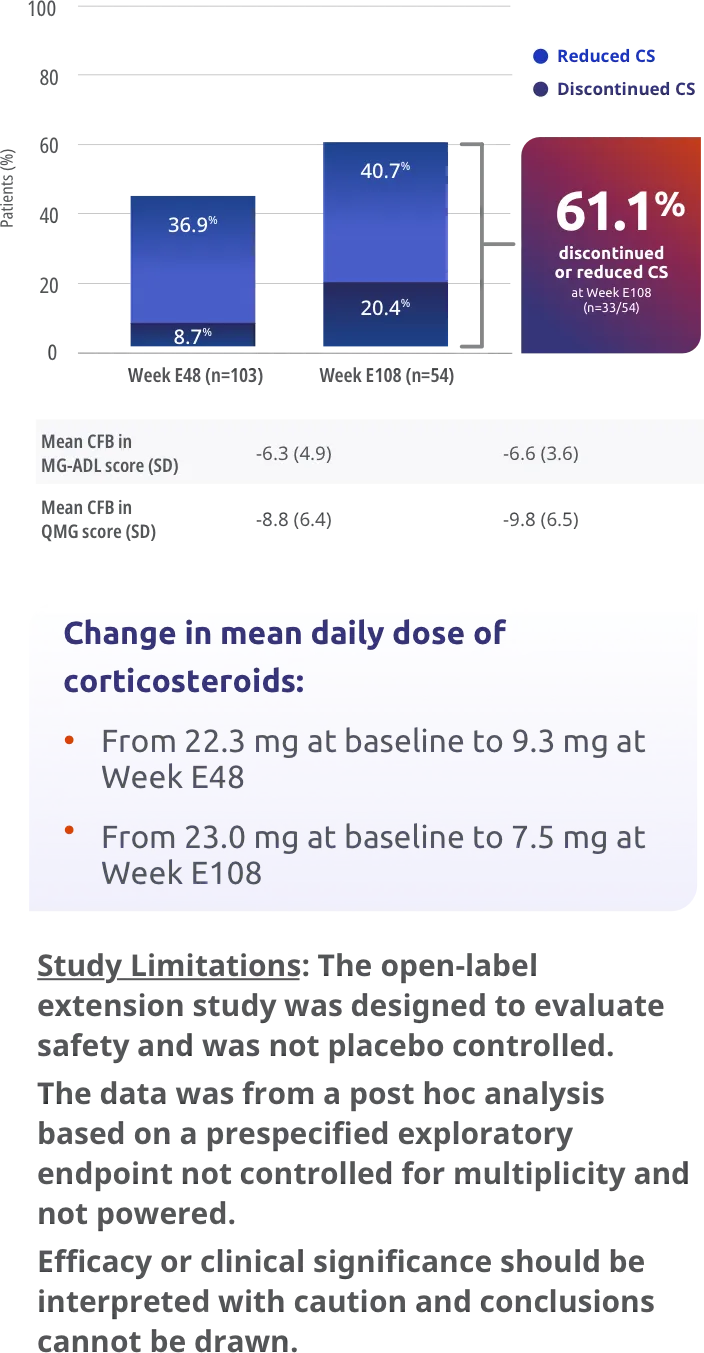
RAISE-XT is an ongoing, multicenter, open-label extension study of ZILBRYSQ in study participants with anti-AChR Ab+ gMG who completed the Phase 2 or Phase 3 (RAISE) study (N=200). The analysis cutoff date was November 11, 2023.3,11
Analysis included patients with >0 mg corticosteroid dose at baseline in the double-blind study. Corticosteroid dose remained stable prior to Week E12.11
Ab+=antibody positive; AChR=acetylcholine receptor; CFB=change from baseline; CS=corticosteroid; MG-ADL=Myasthenia Gravis Activities of Daily Living; QMG=Quantitative Myasthenia Gravis; SD=standard deviation.
Post hoc analysis of exploratory endpoint: change in NSIST dose for over 2 years (Week E108)11*
Proportion of patients who changed at least one NSIST relative to double-blind baseline
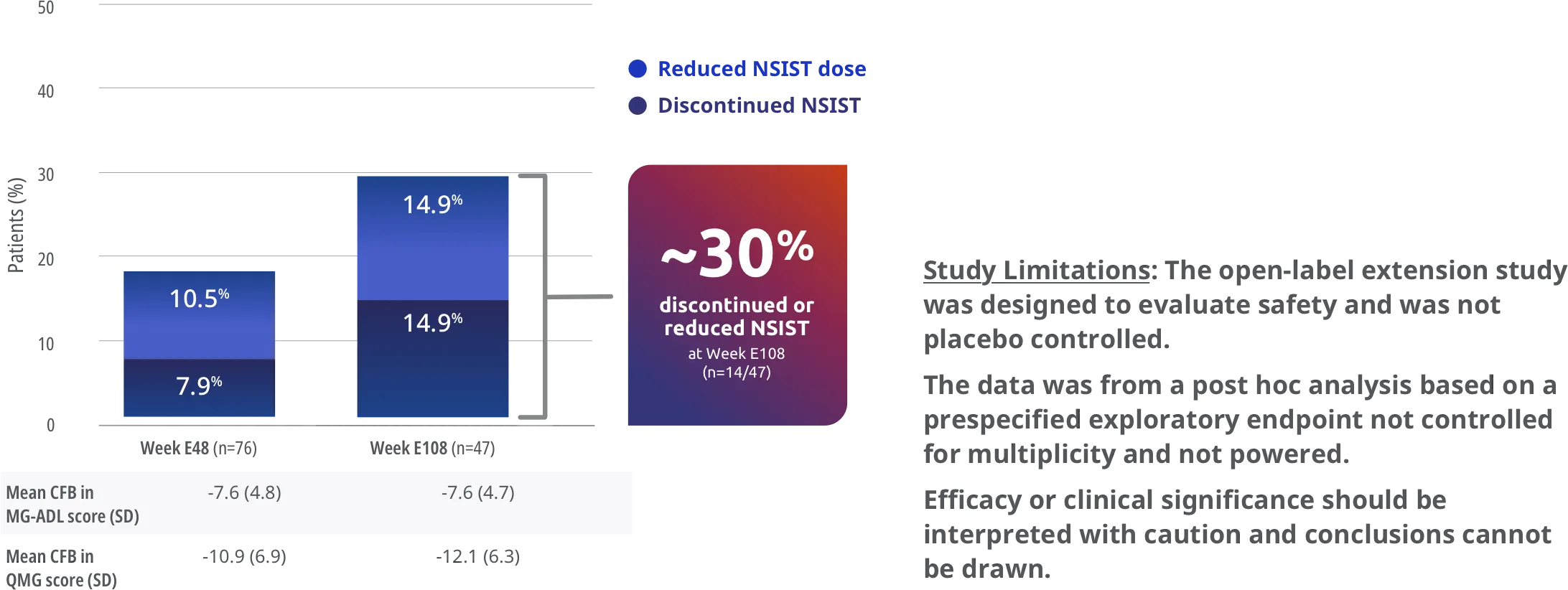
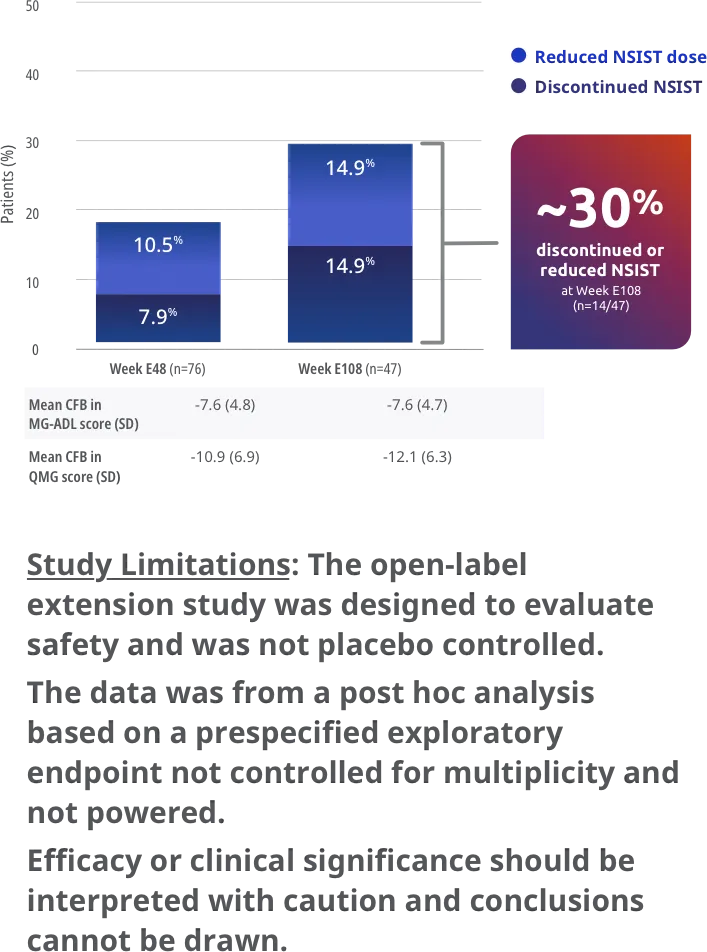
Includes patients who completed Phases 2 and 3 of the clinical study and either continued or switched to ZILBRYSQ from placebo for the open-label extension.3
RAISE-XT is an ongoing, multicenter, open-label extension study of ZILBRYSQ in adult study participants with anti-AChR Ab+ gMG who completed the Phase 2 or Phase 3 (RAISE) study (N=200). The analysis cutoff date was November 11, 2023.3,11
Ab+=antibody positive; AChR=acetylcholine receptor; CFB=change from baseline; MG-ADL=Myasthenia Gravis Activities of Daily Living; NSIST=non-steroidal immunosuppressant therapy; QMG=Quantitative Myasthenia Gravis; SD=standard deviation.
RAISE-XT secondary endpoint measures overview
Quantitative Myasthenia Gravis (QMG)
A physician assessment that quantifies disease severity. Measures are assessed on a scale of 0-3, with total scores ranging from 0 to 39.1
- Improvement of ≥3 points was established as clinically meaningful6
Measures include12:
- Ptosis
- Facial muscle weakness
- Dysarthria
- Grip strength
- Neck flexion endurance
- Diplopia
- Difficulty swallowing 4 oz of water
- Percentage predicted forced vital capacity
- Arm and leg endurance
Myasthenia Gravis Composite (MGC)
A 10-item patient and physician assessment of the signs and symptoms of MG, with total scores ranging from 0 to 50. Higher scores are interpreted as greater impairments.13
- Improvement of ≥3 points was established as clinically meaningful6
Measures include13:
- Ptosis
- Eye closure
- Chewing
- Breathing
- Shoulder abduction
- Diplopia
- Talking
- Swallowing
- Neck flexion/extension
- Hip flexion
Myasthenia Gravis Quality of Life 15-item revised (MG-QoL 15r) scale
A 15-item questionnaire that allows clinicians to estimate a patient’s quality of life relevant to MG. Items are scored from 0 (not at all) to 2 (very much). Cumulative scores range from 0 to 30, with higher scores representing worse quality of life.14
- Clinically meaningful was not defined for the MG-QoL 15r assessment6
Measures include14:
- Frustration
- Trouble eating
- Limitations at work
- Hobby and activity enjoyment
- Depression
- Mobility
- Personal grooming
- Loss of independence


References:
- ZILBRYSQ [Prescribing Information]. Smyrna, GA: UCB, Inc.
- Howard JF Jr, Freimer M, Genge A, et al. Response rates with zilucoplan in generalised myasthenia gravis: 120-week interim analysis of RAISE-XT. Presented at: International Congress on Neuromuscular Diseases; October 25-29, 2024; Perth, Australia. Session OS.03.06.
- Howard JF Jr, Bresch S, Genge A, et al; RAISE Study Team. Safety and efficacy of zilucoplan in patients with generalised myasthenia gravis (RAISE): a randomised, double-blind, placebo-controlled, Phase 3 study. Lancet Neurol. 2023;22(5):395-406. doi:10.1016/S1474-4422(23)00080-7
- Conquer MG. MG Activities of Daily Living (MG-ADL) scale. September 29, 2022. Accessed November 9, 2023. https://www.myastheniagravis.org/mg-activities-of-daily-living-mg-adl-scale/
- Howard JF Jr, Bresch S, Farmakidis C, et al. Long-term safety and efficacy of zilucoplan in patients with generalized myasthenia gravis: interim analysis of the RAISE-XT open-label extension study. Ther Adv Neurol Disord. 2024;17(3):1-16. doi:10.1177/17562864241243186
- Howard JF Jr, Freimer M, Genge A, et al; on behalf of the RAISE-XT Study Team. Long-term safety and efficacy of zilucoplan in generalized myasthenia gravis:120-week interim analysis of RAISE-XT. Poster presented at: American Association of Neuromuscular & Electrodiagnostic Medicine Annual Meeting & Myasthenia Gravis Foundation of America Scientific Session; October 15-18, 2024; Savannah, GA. Poster 192.
- Vu T, Genge A, Hussain Y, et al; on behalf of the RAISE Investigators. Efficacy and safety of zilucoplan in myasthenia gravis: responder analysis from the randomized Phase 3 RAISE trial. Poster presented at: American Association of Neuromuscular & Electrodiagnostic Medicine Annual Meeting; September 21-24, 2022; Nashville, TN. Poster 200.
- ZILBRYSQ [Prescribing Information]. Smyrna, GA: UCB, Inc.
- Howard JF Jr, Freimer M, Genge A, et al. Response rates with zilucoplan in generalised myasthenia gravis: 120-week interim analysis of RAISE-XT. Presented at: International Congress on Neuromuscular Diseases; October 25-29, 2024; Perth, Australia. Session OS.03.06.
- Howard JF Jr, Bresch S, Genge A, et al; RAISE Study Team. Safety and efficacy of zilucoplan in patients with generalised myasthenia gravis (RAISE): a randomised, double-blind, placebo-controlled, Phase 3 study. Lancet Neurol. 2023;22(5):395-406. doi:10.1016/S1474-4422(23)00080-7
- QMG form. Myasthenia Gravis Foundation of America. 1997. Accessed November 9, 2023. https://myasthenia.org/Portals/0/QMG.pdf
- Sadjadi R, Conaway M, Cutter G, et al; MG Composite MG-QOL15 Study Group. Psychometric evaluation of the myasthenia gravis composite using Rasch analysis. Muscle Nerve. 2012;45(6):820-825. doi:10.1002/mus.23260
- Myasthenia Gravis Quality of Life-15 Revised (MG-QOL15R). Myasthenia Gravis Rare Disease Network. September 7, 2022. Accessed October 25, 2023. https://mgnet.rarediseasesnetwork.org/sites/default/files/2023-04/mg-quality-life-15-revised.pdf
- ZILBRYSQ [Prescribing Information]. Smyrna, GA: UCB, Inc.
- Howard JF Jr, Freimer M, Genge A, et al. Response rates with zilucoplan in generalised myasthenia gravis: 120-week interim analysis of RAISE-XT. Presented at: International Congress on Neuromuscular Diseases; October 25-29, 2024; Perth, Australia. Session OS.03.06.
- Howard JF Jr, Bresch S, Farmakidis C, et al. Long-term safety and efficacy of zilucoplan in patients with generalized myasthenia gravis: interim analysis of the RAISE-XT open-label extension study. Ther Adv Neurol Disord. 2024;17(3):1-16. doi:10.1177/17562864241243186
- Howard JF Jr, Freimer M, Genge A, et al; on behalf of the RAISE-XT Study Team. Long-term safety and efficacy of zilucoplan in generalized myasthenia gravis: 120-week interim analysis of RAISE-XT. Poster presented at: American Association of Neuromuscular & Electrodiagnostic Medicine Annual Meeting & Myasthenia Gravis Foundation of America Scientific Session; October 15-18, 2024; Savannah, GA. Poster 192.
- Howard JF Jr, Freimer M, Genge A, et al; on behalf of the RAISE-XT Study Team. Long-term safety and efficacy of zilucoplan in myasthenia gravis: additional interim analyses of RAISE-XT. Presented at: American Academy of Neurology 2024 Annual Meeting; April 13-18, 2024; Denver, CO. Presentation S15.002.
- Howard JF Jr, Bresch S, Genge A, et al; RAISE Study Team. Safety and efficacy of zilucoplan in patients with generalised myasthenia gravis (RAISE): a randomised, double-blind, placebo-controlled, Phase 3 study. Lancet Neurol. 2023;22(5):395-406. doi:10.1016/S1474-4422(23)00080-7
- Data on file. UCB, Inc.
- Data on file. UCB, Inc.
- Leite MI, Bresch S, Hewamadduma C, et al; on behalf of the RAISE-XT Study Team. Effect of zilucoplan on rescue therapy use in patients with generalised myasthenia gravis: RAISE-XT post hoc analysis. Poster presented at: 11th Congress of the European Academy of Neurology; June 21-25, 2025; Helsinki, Finland. Poster EPO-475.
- Hewamadduma C, Bresch S, Freimer M, et al; on behalf of the RAISE-XT Study Team. Sustained minimal symptom expression in generalised myasthenia gravis: a 120-week post hoc analysis of RAISE-XT. Poster presented at: European Academy of Neurology Conference; June 21-24, 2025; Helsinki, Finland. Poster EPO-470.
- Hewamadduma C, Freimer M, Genge A, et al; on behalf of the RAISE-XT Study Team. Changes in corticosteroid and non-steroidal immunosuppressive therapy with long-term zilucoplan treatment in generalized myasthenia gravis. J Neurol. 2025;272(7):1-9. doi.org/10.1007/s00415-025-13113-0
- QMG form. Myasthenia Gravis Foundation of America. 1997. Accessed November 9, 2023. https://myasthenia.org/Portals/0/QMG.pdf
- Sadjadi R, Conaway M, Cutter G, et al; MG Composite MG-QOL15 Study Group. Psychometric evaluation of the myasthenia gravis composite using Rasch analysis. Muscle Nerve. 2012;45(6):820-825. doi:10.1002/mus.23260
- Myasthenia Gravis Quality of Life-15 Revised (MG-QOL15R). Myasthenia Gravis Rare Disease Network. September 7, 2022. Accessed October 25, 2023. https://mgnet. rarediseasesnetwork.org/sites/default/files/2023-04/mg-quality-life-15-revised.pdf